OUR BLOG
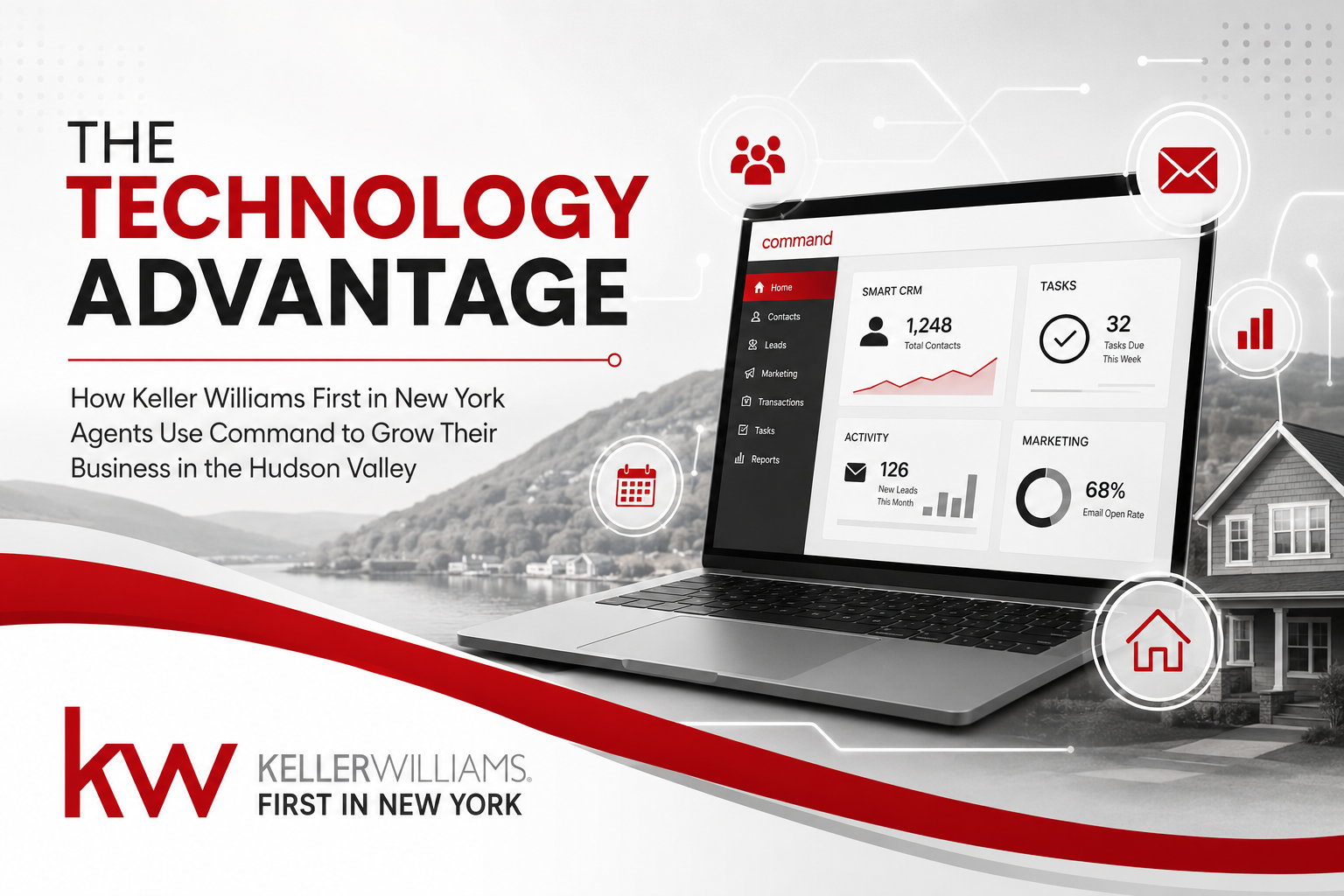
The Technology Advantage: How Keller Williams First in New York Agents Use Command to Grow Their Business in the Hudson Valley
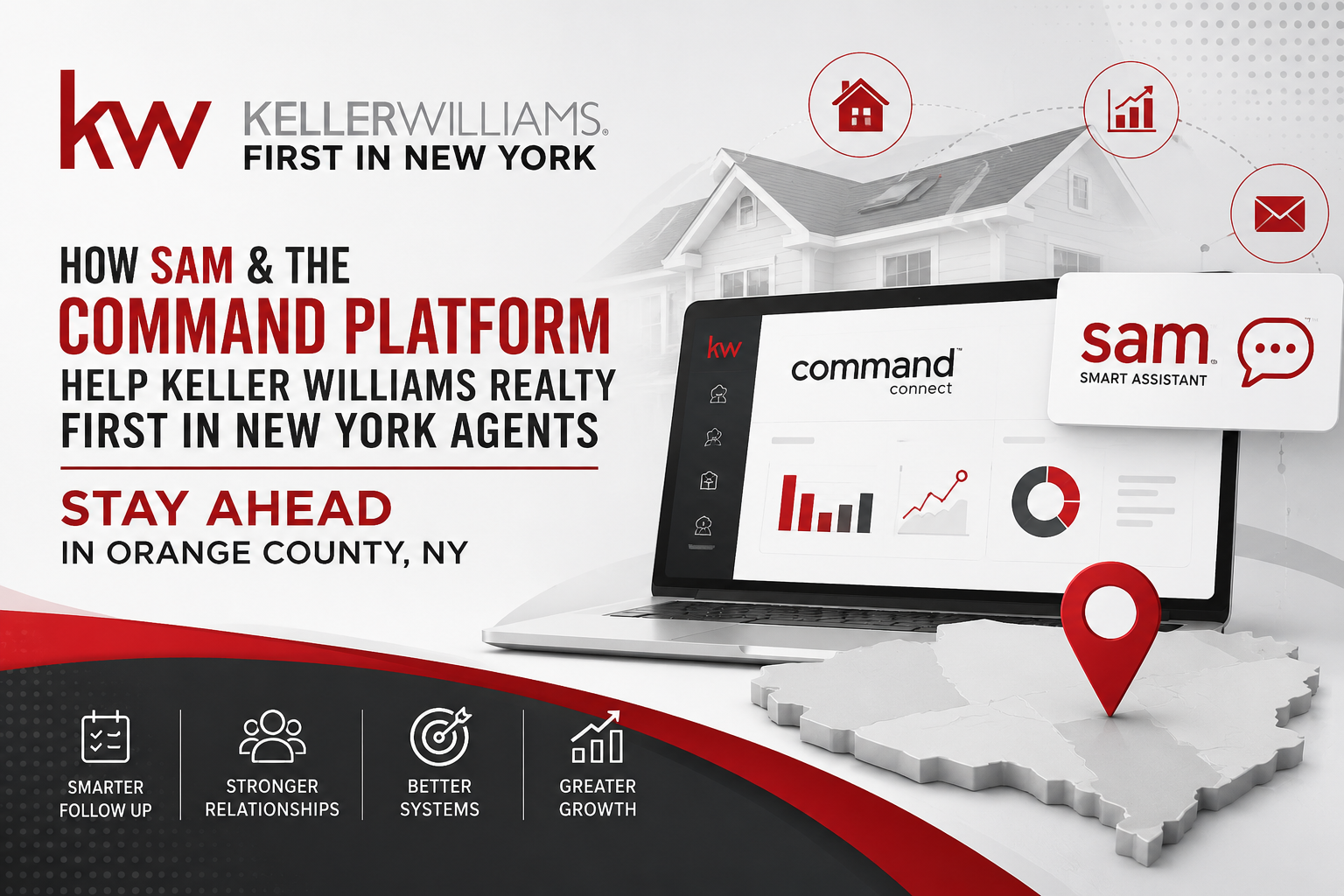
How Sam and the Command Platform Help Keller Williams Realty First in New York Agents Stay Ahead in Orange County NY
Advanced Coaching at Keller Williams Realty First in New York: Scaling Your Real Estate Career in Orange County NY
Advanced Coaching at Keller Williams Realty First in New York: Scaling Your Real Estate Career in Orange County NY
How Keller Williams Realty First in New York Agents Are Growing Their Business in Newburgh NY
Breakthrough Coaching for Real Estate Agents: How to Scale From 4 to 12 Transactions in the Hudson Valley
Starting Real Estate Without Support Can Be Overwhelming Beginning a real estate career is exciting, but it can also feel overwhelming without the right guidance. Many new agents struggle with lead generation, consistency, marketing, and understanding how to build momentum in a competitive industry. At Keller Williams Realty First in New York, the focus is on helping agents build a real foundation from day one through training, mentorship, systems, and local support. Training That Helps Agents Build Confidence Learning Beyond the Basics New agents need more than licensing classes to succeed. Keller Williams Realty First in New York provides ongoing education designed to help agents build confidence and real world experience. Agents gain access to: Coaching and mentorship Lead generation strategies Scripts and communication training Marketing systems and tools Accountability and goal setting The goal is not just to help agents get licensed, but to help them build sustainable careers. To explore Keller Williams technology and training systems further, visit: https://thrive.kw.com/ Why Middletown NY Is a Strong Market for New Agents Opportunity in a Growing Area Middletown continues to grow as one of the most active markets in the Hudson Valley. The area offers: Growing residential development Strong buyer demand Accessibility to New York City commuters Opportunities across multiple price points For newer agents, this creates an environment with real opportunity to gain experience and build a client base. A Culture Focused on Collaboration You Are Not Building Alone One of the biggest differences at Keller Williams Realty First in New York is the collaborative environment. Agents have access to: Experienced mentors Team support Shared knowledge and resources Ongoing accountability and encouragement Instead of trying to figure everything out independently, agents are surrounded by people invested in helping them grow. Conclusion: Building a Real Estate Career With the Right Foundation Starting your real estate career in Middletown NY becomes much more manageable when you have the right systems and support behind you. At Keller Williams Realty First in New York, agents are given the tools, mentorship, and structure needed to build confidence, gain momentum, and create long term success in real estate. Ready to Get Started? If you are considering a career in real estate in Middletown NY, Keller Williams Realty First in New York provides the training, support, and opportunities to help you grow from day one.
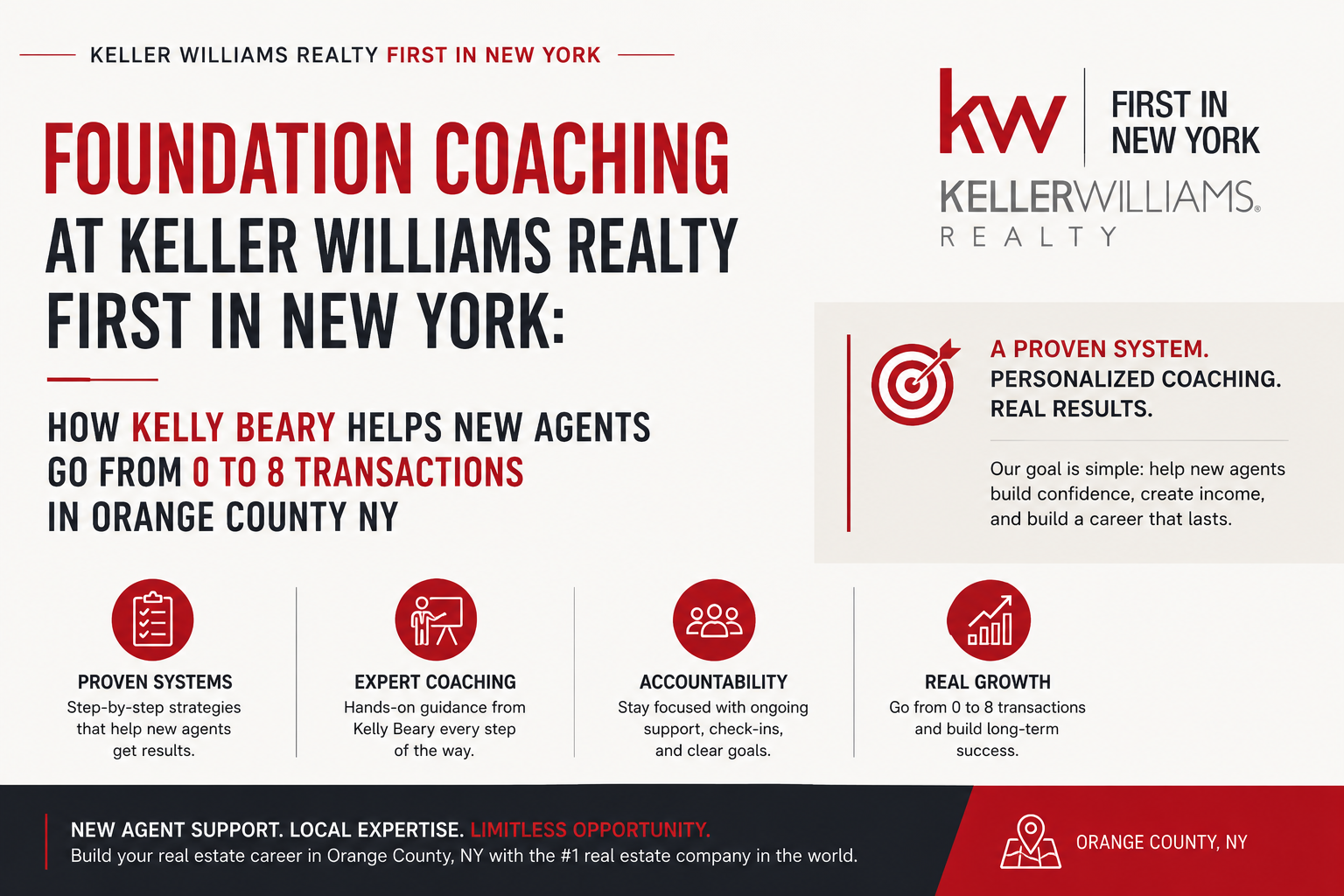
Starting Real Estate Without a Clear System Is Difficult Many new real estate agents enter the industry motivated but overwhelmed. Between lead generation, contracts, follow up, marketing, and learning the local market, it is easy for agents to become stuck without a structured plan. At Keller Williams Realty First in New York, Foundation Coaching was designed to solve that problem. Led by Kelly Beary, the program gives new agents in Orange County a roadmap to move from uncertainty to consistent production, helping many agents reach their first 8 transactions with structure, accountability, and hands on coaching. What Is Foundation Coaching? A Step By Step System for New Agents Foundation Coaching is designed specifically for newer agents who need guidance building the habits, systems, and confidence required to succeed in real estate. The program focuses on: Lead generation strategies Database building and follow up Scripts and conversations Time management and consistency Contracts and transaction guidance Local market education Instead of trying to figure everything out independently, agents work within a structured framework that keeps them focused on income producing activities. For insight into how training impacts agent success, see: NAR Why Coaching Matters Early in a Real Estate Career Most Agents Fail From Lack of Structure Many agents do not struggle because they lack potential. They struggle because they lack systems and accountability. Without guidance, new agents often: Spend time on low value tasks Avoid prospecting consistently Fail to build repeatable routines Lose momentum after early setbacks Foundation Coaching creates consistency from the beginning, helping agents develop habits that can scale long term. How Kelly Beary Helps Agents Build Momentum Training Combined With Real Accountability Kelly Beary’s coaching approach is focused on execution, not just motivation. Agents receive: Ongoing accountability and check ins Clear production goals Practical lead generation strategies Support navigating active deals and conversations The focus is not simply on learning real estate theory. It is on building real production through daily activity and market exposure. This creates an environment where newer agents can develop confidence much faster than they would independently. The Advantage of Building a Career in Orange County NY A Market Full of Opportunity Orange County continues to be one of the strongest real estate markets within the Hudson Valley. Agents benefit from: Consistent buyer demand Relocation activity from New York City Diverse inventory across multiple price points Strong community referral networks For newer agents, this creates real opportunity to gain experience and build momentum quickly. For local housing market trends, see: https://www.zillow.com/home-values/ Technology and Systems That Support Growth More Than Just Coaching Foundation Coaching is supported by the larger Keller Williams ecosystem, giving agents access to tools and systems designed for long term growth. Agents have access to: CRM and follow up systems Marketing tools and templates Transaction support Ongoing education and coaching To explore Keller Williams technology and agent resources further, visit: https://thrive.kw.com/ Building More Than Transactions Creating Long Term Careers At Keller Williams First in New York, the goal is not just helping agents close their first deal. The focus is building sustainable businesses and long term careers. Foundation Coaching helps agents: Build confidence Develop repeatable systems Create strong client relationships Generate long term momentum This creates a stronger foundation for growth beyond the first year in real estate. Conclusion: A Faster Path to Real Growth Starting a real estate career can feel overwhelming without the right guidance. Foundation Coaching at Keller Williams First in New York gives new agents the structure, accountability, and support needed to gain traction faster. With Kelly Beary’s coaching, newer agents are not left trying to figure everything out alone. They are placed into a system designed to help them build confidence, create consistency, and move toward real production in the Orange County NY market. Ready to Start Your Real Estate Career? If you are considering a career in real estate and want a clearer path toward growth, Foundation Coaching at Keller Williams First in New York can help you build momentum from day one. Connect with Keller Williams First in New York to learn more about coaching, training, and opportunities for agents in Orange County NY.
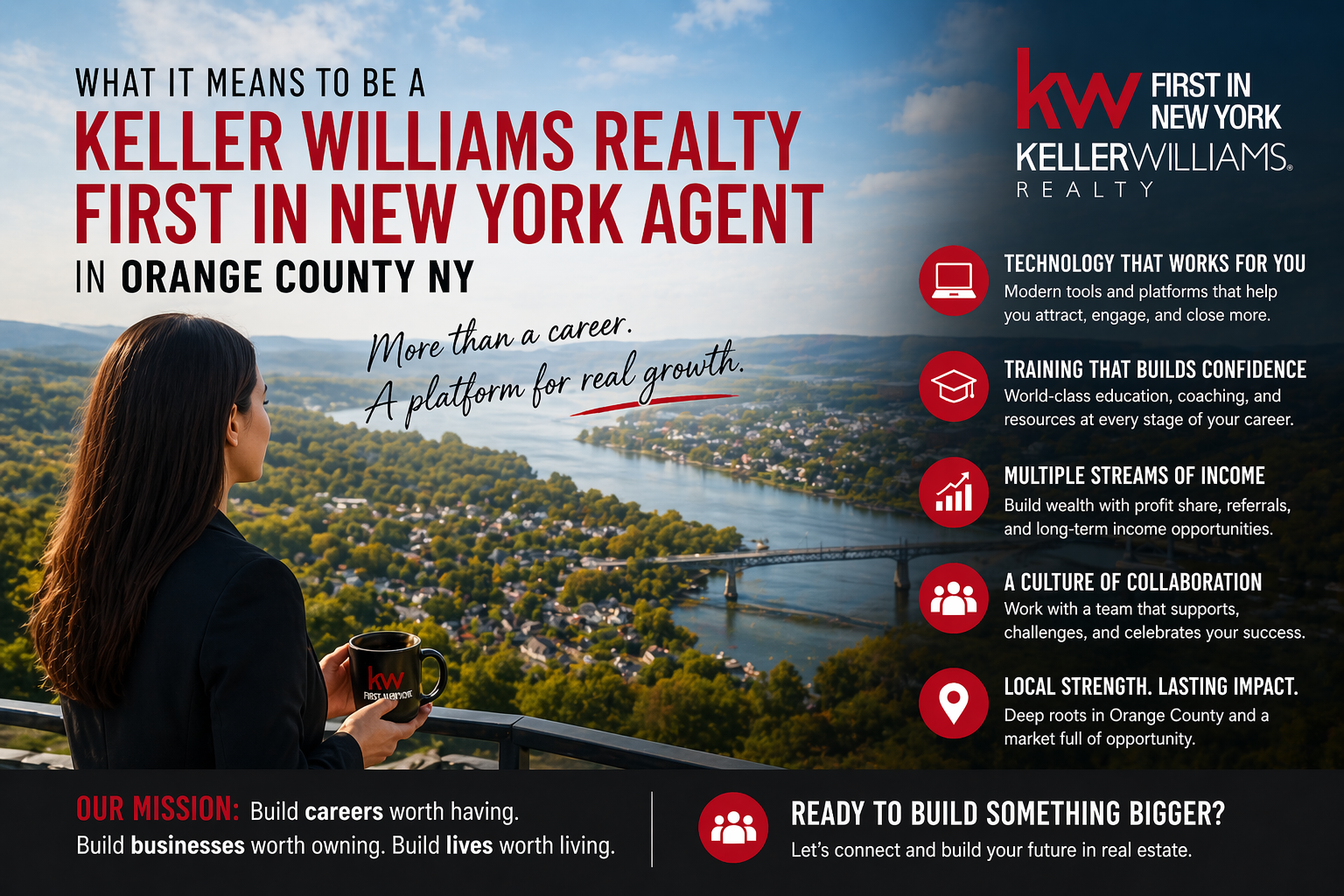
Learn what it means to be a Keller Williams Realty First in New York agent in Orange County NY with training, technology, and growth opportunities.
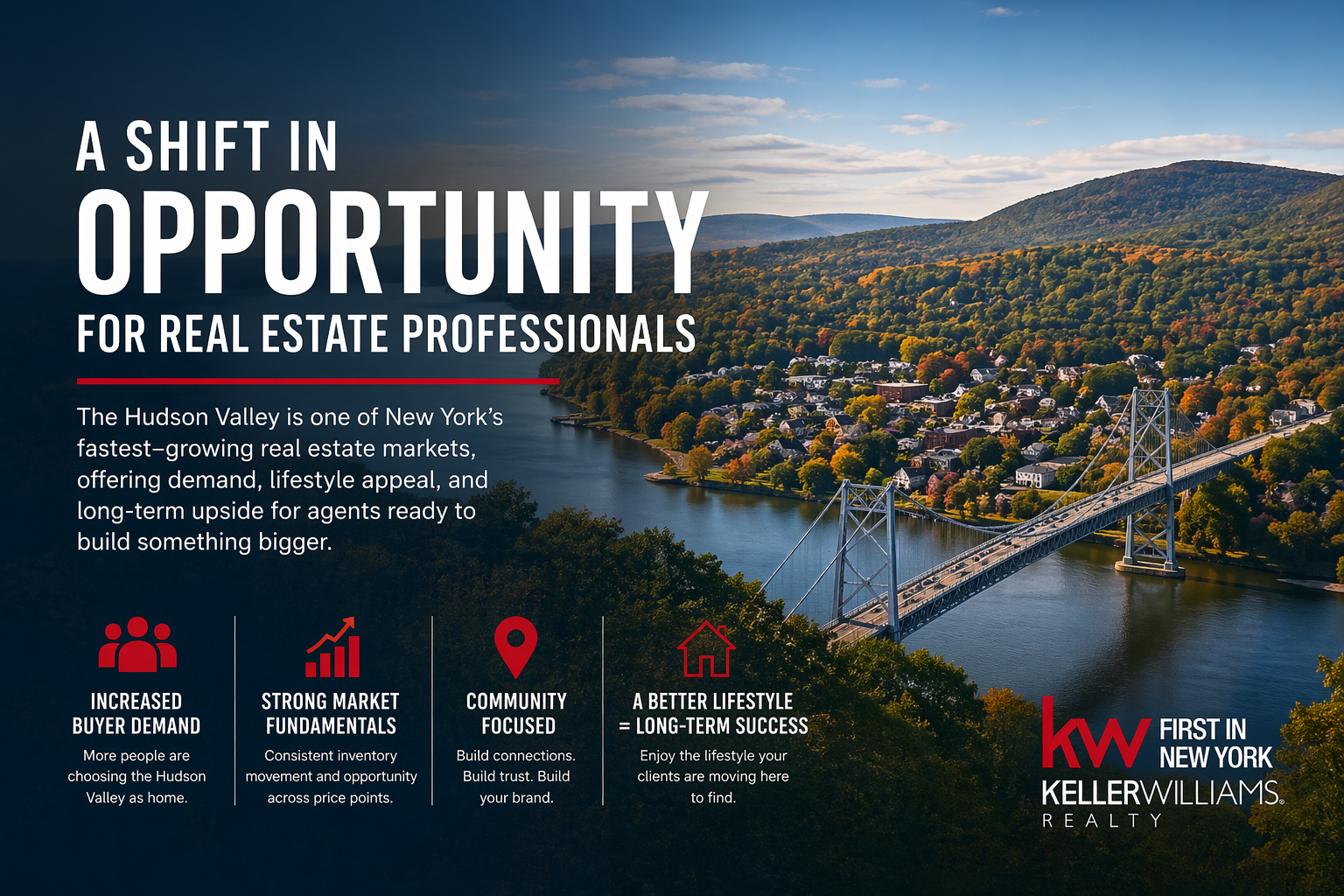
Discover why real estate agents are building their careers in the Hudson Valley, with strong demand, lifestyle benefits, and long term growth opportunities.